
India's exports may have touched an all-time high of $422 billion in 2021-22 but recession in key western markets and geo-political crisis due to the Russia-Ukraine war are expected to impact the growth of the country's outbound shipments in 2023. All the global trade promoting factors like political stability, movement of goods, adequate availability of containers and shipping lines, demand, stable currency and smooth banking systems are in disarray. Adding to the woes, COVID cases have again started rising in countries like China, Japan, South Korea and the US.

Eminent economist Arvind Panagariya has said India is on the cusp of returning to a high growth trajectory and voiced confidence that the country will become the world's third-largest economy by 2027-28. Currently, India is the fifth largest economy "so it's another five years.We are already in (the year) 2023. "So 2027-28, India should be the third-largest economy," Panagariya, Columbia University Professor and former Vice Chairman of NITI Aayog, told PTI in an interview in New York.

Info Edge (India) reported a good fourth quarter for the 2022-23 financial year (Q4FY23) given depressed conditions in the Key IT segment. The billing growth of 13.7 per cent year-on-year (YoY) in recruitment was well ahead of market expectations. There was solid growth in realisations (up 5.5 per cent) as well as unique customers (up 7.7 per cent).

The NSE 50-share after moving between 10,309.85 and 10,261.50 on alternate bouts of selling and buying, finished at 10,298.75, with paltry gains of 15.15 points, or 0.15 per cent.

The real requirement for the finance minister's explanatory speech is to explain the measures taken in the Budget to influence inflation and growth not just through the announcement of a deficit goal, but more broadly through the impact on money supply, consumer demand, foreign trade and investment, explains Nitin Desai.

Pragmatism and flexibility is a virtue. An untethered and short-term approach to policymaking is a flaw, argues Mihir S Sharma.

A looming global shortage of diesel in Europe presents India with more than one opportunity to profit from strong margins. A shortage of the fuel, a key contributor to inflation, has been exacerbated by the conflict in Ukraine, and western sanctions on Russian fuel supplies. The slowdown in natural gas supply means the West needs diesel to heat their homes this winter.

Auto makers are in the midst of a rally with the NSE auto index up 17.5 per cent since the start of February.
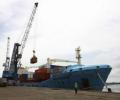
Stock to watch: Shipping Corporation and Great Eastern Shipping

Ahead of the Union Budget for 2023-24, Budget makers have welcomed the global consensus view that India will remain one of the bright spots in calendar year 2023. But there is some alarm over the grim global situation and how that might impact the Centre's projections and assessments for next financial year. The big global headwinds include a deep and sustained recession in the West, including India's biggest trading partners in North America and Europe, continuing volatility in commodity markets, and renewed Covid-19 fears, as lifting of strict curbs by China could potentially lead to a massive spread again.

The government should bring natural gas under the Goods and Services Tax (GST) regime to realise Prime Minister Narendra Modi's vision for a gas-based economy and raising the share of the environment-friendly fuel in India's energy basket, an industry body that represents the likes of Reliance Industries as well as state-owned firms, has said. Natural gas is currently outside the ambit of GST, and existing legacy taxes -- central excise duty, state VAT, central sales tax -- continue to be applicable on the fuel. In its pre-Budget memorandum to the finance ministry, Federation of Indian Petroleum Industry (FIPI), which boasts of members from across the oil and gas spectrum, also demanded rationalisation of GST on transportation of natural gas through pipeline as well as on re-gasification of imported LNG to help bring down cost of the environment friendly fuel.

The headline for corporate profit growth has been very encouraging in the July-September quarter (Q2) of 2023-24 (FY24), with the combined net profit of listed companies up by 38 per cent year-on-year. However, the earnings distribution has been very lopsided, with most of the growth coming from public-sector oil-marketing companies (OMCs), banks, non-bank lenders, automobile (auto) companies, and cement producers. By comparison, companies from information technology services, fast-moving consumer goods (FMCG), retail, and consumer durables were disappointed, experiencing a sharp slowdown in net sales growth and a relatively muted increase in reported net profit.
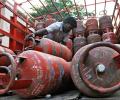
Cooking gas LPG price was on Thursday hiked by Rs 3.50 per cylinder, the second increase in rate this month following the firming of international energy rates. Non-subsidised LPG now costs Rs 1,003 per 14.2-kg cylinder in the national capital, up from Rs 999.50 previously, according to a price notification of state-owned fuel retailers. This is the second increase in LPG rate this month and the third in less than two months. The price was hiked by Rs 50 per cylinder on March 22 and again by the same quantum on May 7.

The government has hiked gold import duty to 15 per cent from 10.75 per cent to check the current account deficit (CAD) and rising import of the yellow metal. The duty changes came into effect on June 30. Earlier, the basic customs duty on gold was 7.5 per cent, now it will be 12.5 per cent.

FDI is a major driver of economic growth and a source of non-debt finance for the economic development of the country. The government has put in place an investor-friendly policy on FDI, under which investment up to 100 per cent is permitted on the automatic route in most sectors/ activities. At $ 64.37 billion, FDI in 2018-19 is the highest ever investment received for any financial year.
ITC Ltd on Friday reported a 23.09 per cent increase in consolidated net profit at Rs 5,070.09 crore for the third quarter ended December 2022, helped by growth momentum across its operating segments. The diversified company had posted a net profit of Rs 4,118.80 crore during the October-December quarter of the previous fiscal, ITC said in a regulatory filing. Its revenue from operations was up 3.56 per cent to Rs 19,020.65 crore during the quarter under review, as against Rs 18,365.80 crore in the corresponding period of the previous fiscal.

While FIIs have pumped in nearly Rs 17,000 crore, MFs have been net buyers to the tune of Rs 9,000 crore.

The RBI on Friday said maiden Sovereign Green Bonds (SGrBs) would be issued in two tranches for an aggregate amount of Rs 16,000 crore, and proceeds will be utilised for funding public sector projects seeking to reduce carbon emissions. The first auction would be done on January 25 while the second on February 9, the Reserve Bank of India (RBI) said in a statement. The proceeds will be deployed in public sector projects, which help in reducing the carbon intensity of the economy, it said.

Post DeMo and GST, business outlook remain diminished among both buyers and sellers

The move is meant to curb or reverse the export of India's financial markets to overseas trading platforms.

One could argue that India is not troubled in the same way as China is by a declining population and structural problems in real estate/construction and finance. But India has serious trade and fiscal imbalances, and excessive dependence on capital expenditure by the government, points out T N Ninan.
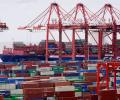
After staging a strong recovery from COVID-induced slowdown in 2021, India's exports are likely to extend the growth story to the New Year also on increased demand in the global markets, boost in domestic manufacturing due to production-linked incentive schemes and implementation of some interim trade pacts. Expectations of positive growth in the country's exports are also backed up by the outlook of the World Trade Organisation (WTO) which predicts a 4.7 per cent expansion in the global merchandise trade volume in 2022. Exporters believe that the outbound shipments would cross $400 billion mark in this fiscal going by the current momentum and may reach $475 billion in 2022-23.

The Securities and Exchange Board of India's (Sebi's) investigation into the Hindenburg allegations is making slow progress when it comes to obtaining information from overseas regulators, particularly around ultimate beneficial ownerships of certain foreign portfolio investors (FPIs), said people in the know. "Establishing ultimate beneficial ownerships for FPIs is a very complex exercise. "Several jurisdictions allow omnibus structures where the end beneficiaries are not required to be captured or are based in some other geographies.

Nirmala Sitharaman's messaging was clear when she presented a well-balanced Budget with an eye on state elections in nine states followed by a general election next year, observes Ramesh Menon.

The S&P BSE Auto Index has been one of the biggest outperformers among sectoral indices over the past year with returns of 26 per cent. By comparison, the benchmarks - the National Stock Exchange Nifty50 and the S&P BSE Sensex - managed about 6-8 per cent during this period. Improving demand, falling raw material costs, and rising product realisations, led by the premiumisation of portfolios, have led to a revision of growth estimates and upgrades by domestic brokerages.

For the first time in 21 years, the Reserve Bank of India (RBI) will revise norms for investment portfolios of commercial banks to reflect changes in global standards on valuation and measurement, and progress in the domestic market. This could pave the way for banks to transition to the new accounting standards (Ind-AS). The outstanding investment portfolio of commercial banks was at Rs 45.84 trillion as of November 19 this year.

Investors brace up ahead of the key macrodata- IIP and CPI numbers due to be unveiled tomorrow.

Don't be surprised if growth in the second half of the financial year drops below 4%, which is where it was in the year before the pandemic, warns T N Ninan.
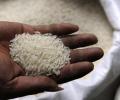
The government on Thursday imposed a 20 per cent export duty on non-Basmati rice except for parboiled rice to boost domestic supplies amid a fall in area under the paddy crop in the current Kharif season. According to a notification by the revenue department, an export duty of 20 per cent has been imposed on 'rice in husk (paddy or rough)' and 'husked (brown) rice'. The Central Board of Indirect Taxes & Customs further said the export of 'semi-milled or wholly-milled rice, whether or not polished or glazed(other than Parboiled rice and Basmati rice)' will also attract a customs duty of 20 per cent.

Among other stocks, IT firm Mphasis today reported a 15.30% increase in consolidated net profit at Rs 184.72 crore for the quarter ended September 30, 2015.

India's largest listed pharmaceutical (pharma) company - Sun Pharmaceutical Industries (Sun Pharma) - is expected to maintain its outperformance vis--vis the sector's, as its multiple bets on specialty products, improving product mix, recent acquisitions, and branded business are finding favour with brokerages. While it has gained 7 per cent over the past year, the Nifty Pharma Index is down 13.6 per cent. Its outperformance over two years has been fairly evident, with the market leader gaining 66 per cent to Nifty Pharma's minus 1.4 per cent.

Since January this year, Indian exporters have begun to dread the shipping news. That's because most of it would be about another lot of shipping companies deciding to avoid Indian ports on account of delays.

Gujarat and Karnataka have been ranked as the best performers in developing startup ecosystem for budding entrepreneurs, according to the ranking of states and Union territories by the Department for Promotion of Industry and Internal Trade (DPIIT). Among smaller states having population of less than one crore, Meghalaya has been adjudged as the best performer. The rankings are based on the initiatives taken to develop the startup ecosystem for promoting budding entrepreneurs.

Tata Steel was the top gainer in the Sensex pack, zooming 7.57 per cent, followed by Sun Pharma, IndusInd Bank, L&T, ITC and HCL Tech.

7 key areas that the Budget must address to re-energise the infrastructure sector, suggests Vinayak Chatterjee.

It became increasingly clear that the real negotiations the government had to conduct were with Indian business which was wary of yet another free trade agreement, points out T N Ninan.

Equity indices frittered away a good start to close with modest losses on Monday, pressured by heavy selling in metal stocks after the government imposed export duties on steel-making raw materials to curb soaring prices. The 30-share BSE Sensex opened strong and gained momentum as the session progressed, but came under severe selling pressure in afternoon trade to close 37.78 points or 0.07 per cent lower at 54,288.61. On similar lines, the broader NSE Nifty slipped 51.45 points or 0.32 per cent to end at 16,214.70.

Real estate sector cheers reforms in the Budget.

The cigarettes segment had a revenue of Rs 4,554.21 crore during the second quarter of the current fiscal, as against Rs 8,528.47 crore in the year-ago period, down 46.56 per cent.

Cooking gas LPG price on Wednesday was hiked by Rs 50 per cylinder, the third increase in rates since May on firming international energy prices. Non-subsidised LPG now costs Rs 1,053 per 14.2-kg cylinder in the national capital, up from Rs 1,003 previously, according to a price notification of state-owned fuel retailers. Common households pay non-subsidised rates for the cooking gas they buy, after the government restricted subsidy to just poor beneficiaries who got connections under the Ujjwala scheme.
